

For New Zealand adults assessing an online casino, two figures deserve more attention than a game’s theme or advertised jackpot: return to player (RTP) and volatility. They describe different aspects of mathematical design, so neither should be read as a promise of profit or a prediction about the next session. The published information for Crowngreen refers to categories such as slots, roulette, blackjack and live-dealer games, but availability and terms may differ by market. Understanding how these measures work helps you compare games carefully and avoid drawing conclusions from short-term results.
What RTP actually tells you
RTP is a theoretical percentage showing how much of the money wagered on a particular game may be returned to players over a very large number of plays. A slot with a stated RTP of 96% is designed to return an average of $96 for every $100 wagered across its mathematical model. The remaining $4 represents the theoretical house edge. It does not mean that a player who stakes $100 will receive $96 back, or that results will balance out during one evening.
The time scale matters. RTP is calculated over an extensive sample of spins, hands or rounds, not over an individual account or a convenient number of sessions. A player might win substantially, lose quickly or finish close to even while playing a game with a high theoretical RTP. The result of a single spin is still governed by the game’s random number system, assuming the game operates as described.
RTP can also vary between games that appear similar. Different versions of the same title may use different settings, and some games display several RTP options. Check the information panel, rules or help screen for the exact version available to your account. A lobby label such as “hot RTP” may be a sorting category rather than a guarantee that every included title has an unusually high return. Treat it as a prompt to investigate, not as evidence of better short-term results.
Why volatility changes the playing experience
Volatility, sometimes called variance, describes how a game’s results are distributed. Low-volatility games tend to produce smaller, more frequent wins, although those wins may not exceed the value of losing bets by much. High-volatility games generally produce longer stretches without a meaningful return, balanced by the possibility of larger individual wins. Medium-volatility games sit between these broad patterns.
Volatility does not replace RTP. Two slots can have the same theoretical RTP while feeling completely different because one pays many small prizes and the other concentrates its potential return in rare combinations. A high-volatility game is not automatically better, and a low-volatility game is not automatically safer. Both can lose money over a short session, and neither characteristic removes the house edge.
Game descriptions do not always present volatility using a standard scale. One provider may use stars, another may use words, and some may provide no clear rating at all. Jackpot features, bonus rounds, multipliers and buy features can make the distribution of outcomes harder to interpret. If volatility is not disclosed, avoid treating the game’s visual style, advertised maximum win or recent popularity as a substitute for reliable information.
How to compare games without overreading the figures
Start by identifying the exact title and its published RTP. Then look for the volatility rating, hit frequency if supplied, maximum win and the rules for special features. These details should be considered together. A high maximum win may depend on an exceptionally rare event, while a frequent hit rate may include small returns that do little to offset the total stake.
A practical comparison can use the following questions:
- Is the displayed RTP clearly tied to this particular game version?
- Is volatility explained using a recognisable scale or definition?
- Do bonus rounds, jackpots or multipliers materially affect the outcome pattern?
- Are the paylines, stake range and winning combinations easy to verify?
- Does the game’s pace encourage more bets than your planned budget allows?
For table games, the comparison works differently. Roulette RTP depends on the wheel design and wager type; blackjack depends on the rules and the player’s decisions; baccarat bets have different theoretical returns. Live presentation does not alter the underlying mathematics. Before playing, read the rules for the exact table rather than assuming that every version of a familiar game has the same edge.

What short sessions can—and cannot—show
Short-term results are noisy. A cluster of wins does not demonstrate that a game is “due” to lose, and a sequence of losses does not mean a large win is approaching. Random outcomes can form patterns that look meaningful even when each round is independent. This is why recent results, hot-game labels and personal anecdotes are weak evidence for judging RTP.
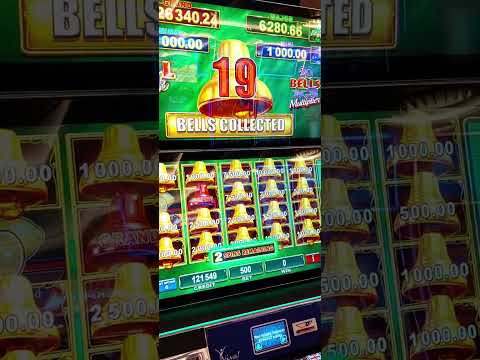
Trying a game for a few minutes cannot verify its advertised RTP or volatility. A small sample is far too limited to test a long-run theoretical percentage, and a bonus round or unusually large win can distort the apparent outcome in either direction. Screenshots, reviews and informal “tests” have the same limitation unless they are based on transparent, independently verified data over a suitable scale.
New Zealand readers should also separate mathematical information from regulatory or account questions. The Department of Internal Affairs gambling information provides general public guidance, but it does not confirm the RTP, volatility, eligibility or terms of any particular offshore operator. Check the live game rules and current account conditions, and confirm that online gambling is lawful and permitted for your location before considering play.
Use RTP and volatility in a sensible decision
These figures are most useful for setting expectations, not choosing a guaranteed winner. Someone who prefers frequent smaller outcomes may find a lower-volatility game less frustrating, while another person may prefer a higher-volatility game with fewer but potentially larger events. That is a preference about the shape of risk, not a method for overcoming the house edge.
Set a fixed entertainment budget before opening a game and treat every stake as money that may be lost. Decide how long the session will last, avoid increasing stakes to recover losses and stop when the planned limit is reached. A high RTP does not justify exceeding a budget, because the theoretical advantage only applies across a large volume of wagering and does not protect an individual session.
Finally, read the rules before using any promotional balance. Wagering conditions may restrict which games count and at what contribution rate, meaning the headline RTP of a chosen game does not explain the complete value of an offer. If the game information, RTP setting or volatility description is unclear, choose not to proceed until the operator provides a satisfactory explanation. Uncertainty is a reason to pause, not a reason to stake more.
Frequently asked questions
Is a higher RTP always the better choice?
A higher RTP generally indicates a lower theoretical house edge when comparing games under similar conditions, but it does not guarantee better short-term results. Volatility, rules, stake size and bonus restrictions also matter. A player can lose quickly on a high-RTP game or win on a lower-RTP game by chance.
Does high volatility mean a bigger possible jackpot?
Not necessarily. High volatility usually means outcomes are distributed less evenly, with potentially longer losing stretches and less frequent larger returns. A game’s maximum win and jackpot rules are separate details. Always check the published paytable and feature terms instead of assuming volatility reveals the largest possible prize.
Can recent results reveal which game will win next?
No. Previous spins or rounds do not reliably predict the next outcome in a properly random game. A run of losses does not make a win due, and a recent jackpot does not prove that a game has become cold. Use published mathematical information, not recent-result patterns, when comparing games.